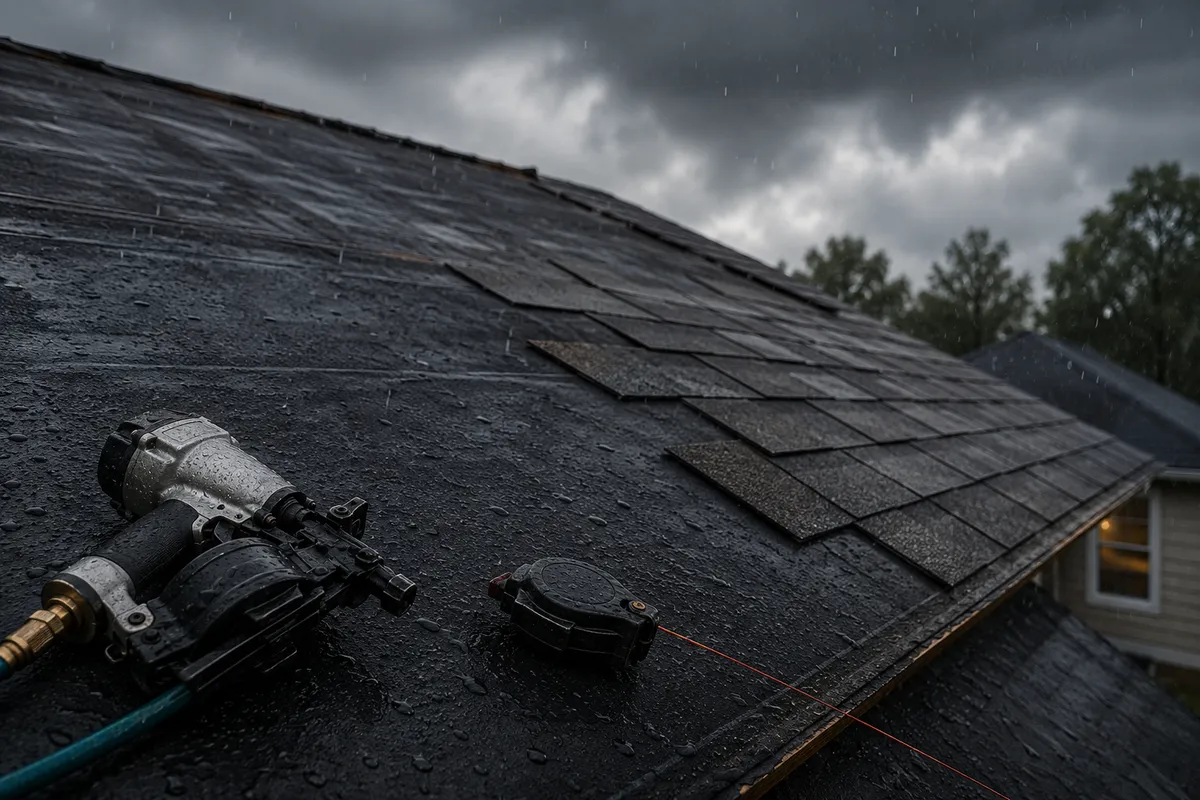
Can Roofing Be Done in the Rain?
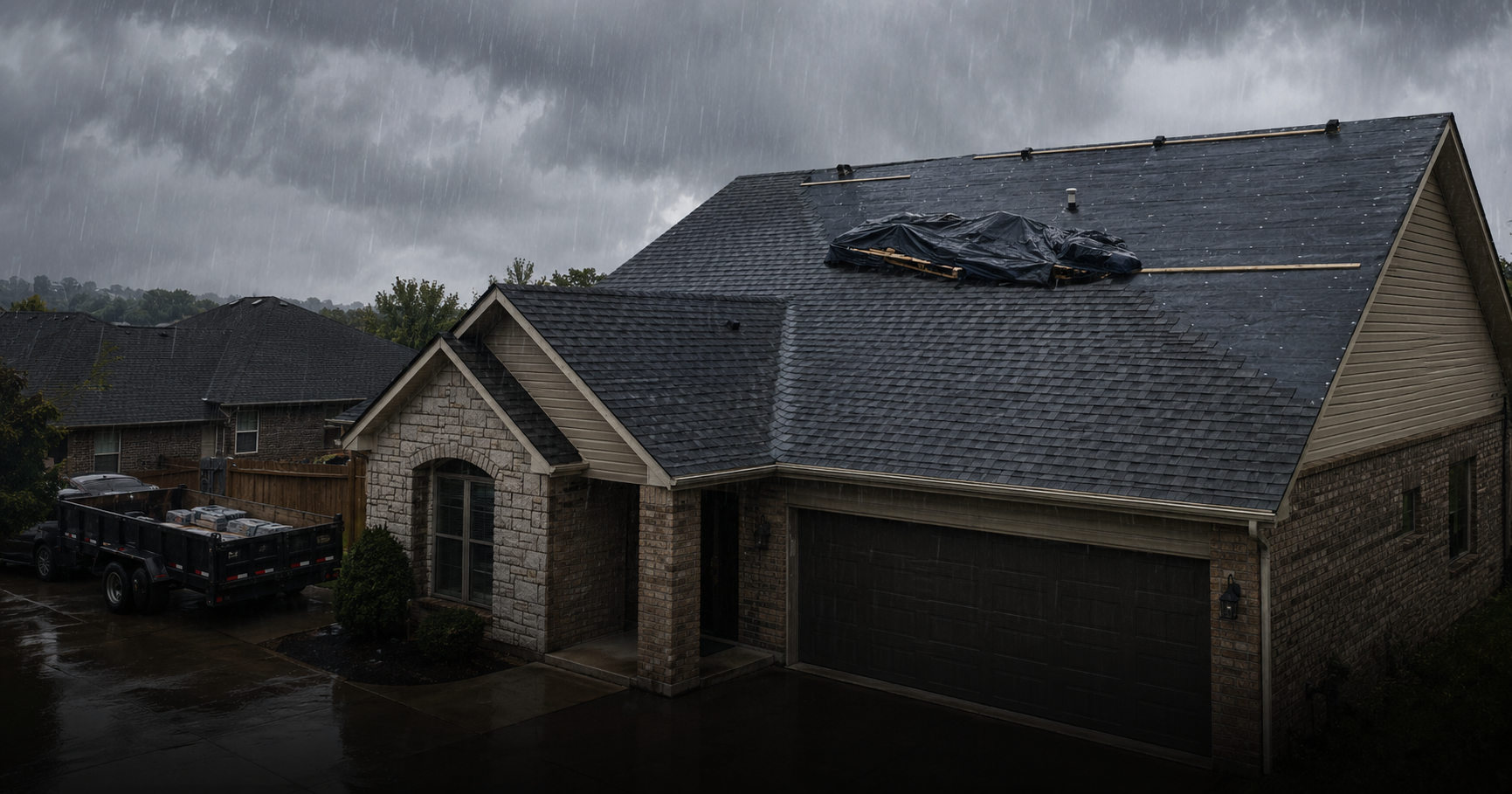
No — reputable roofing contractors will not install shingles in the rain, and you shouldn’t want them to. Rain during a roofing job creates three serious problems: wet roof surfaces are dangerously slippery for workers, asphalt shingles won’t seal properly on wet underlayment, and moisture trapped under new shingles leads to mold, rot, and premature failure.
- Safety: Wet roofs are extremely slippery — the fall risk is unacceptable.
- Seal failure: Asphalt shingles have thermally-activated adhesive strips that won’t bond on wet surfaces.
- Moisture trapping: Installing shingles over wet felt or decking locks moisture in.
- Rain mid-job is normal — crews tarp the exposed area and resume when it dries.
- A good contractor plans around weather — the timeline should account for rain days.
What Happens If It Rains Mid-Job
If rain starts during an active installation, a professional crew will stop work immediately, cover any exposed decking and underlayment with tarps, secure loose materials, and leave the site safe until conditions clear. This is standard procedure — every roofing contractor in the country deals with weather interruptions.
The underlayment (felt or synthetic) is designed to handle temporary rain exposure. It will shed water and protect the deck for the short term. Once the rain stops and the surface dries, work resumes.
When It’s OK to Work
| Condition | Safe to Roof? |
|---|---|
| Dry, clear day | Yes |
| Overcast, no rain | Yes |
| Light drizzle starting | Stop and tarp |
| Steady rain | No — wait |
| Wet surface from overnight dew | Wait until dry |
| Snow on roof | Clear snow, verify temp above 40°F |
Temperature Matters Too
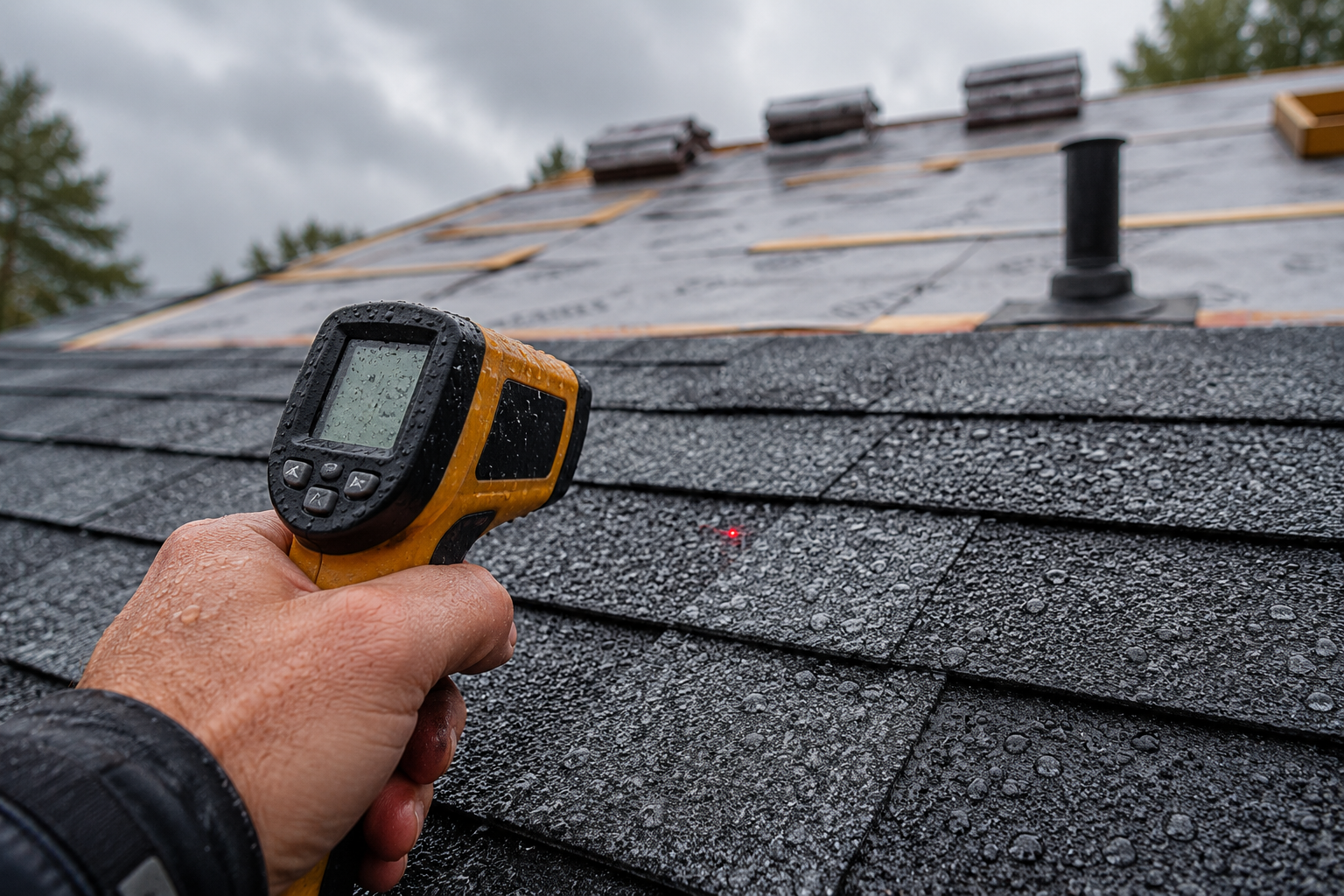
Asphalt shingles need temperatures above 40°F for the adhesive strips to activate and seal. In cold or damp conditions, the strips may never fully bond, leaving shingles vulnerable to wind uplift. Some manufacturers specify minimum installation temperatures in their warranty requirements.
Frequently Asked Questions
How long after rain can roofers work?
Once the roof surface is visibly dry to the touch — typically 2–4 hours of sun and wind after rain stops. Synthetic underlayment dries faster than felt.
Will my roof leak if it rained during installation?
Not if the crew properly tarped the exposed areas. Temporary exposure to rain during installation doesn’t damage a properly protected roof.
Should I worry if my roofer works in light rain?
Yes. Any contractor willing to install shingles on a wet surface is cutting corners. It’s a safety and quality red flag.
Written by the Roofana Team · Last updated: July 2026
Related: Homeowner Guides Hub · Can Roofing Be Done in Winter? · Can Roofing Felt Get Wet?
Price your roof free at roofana.com — 60 seconds, no salesman. Or call (414) 404-7663.
