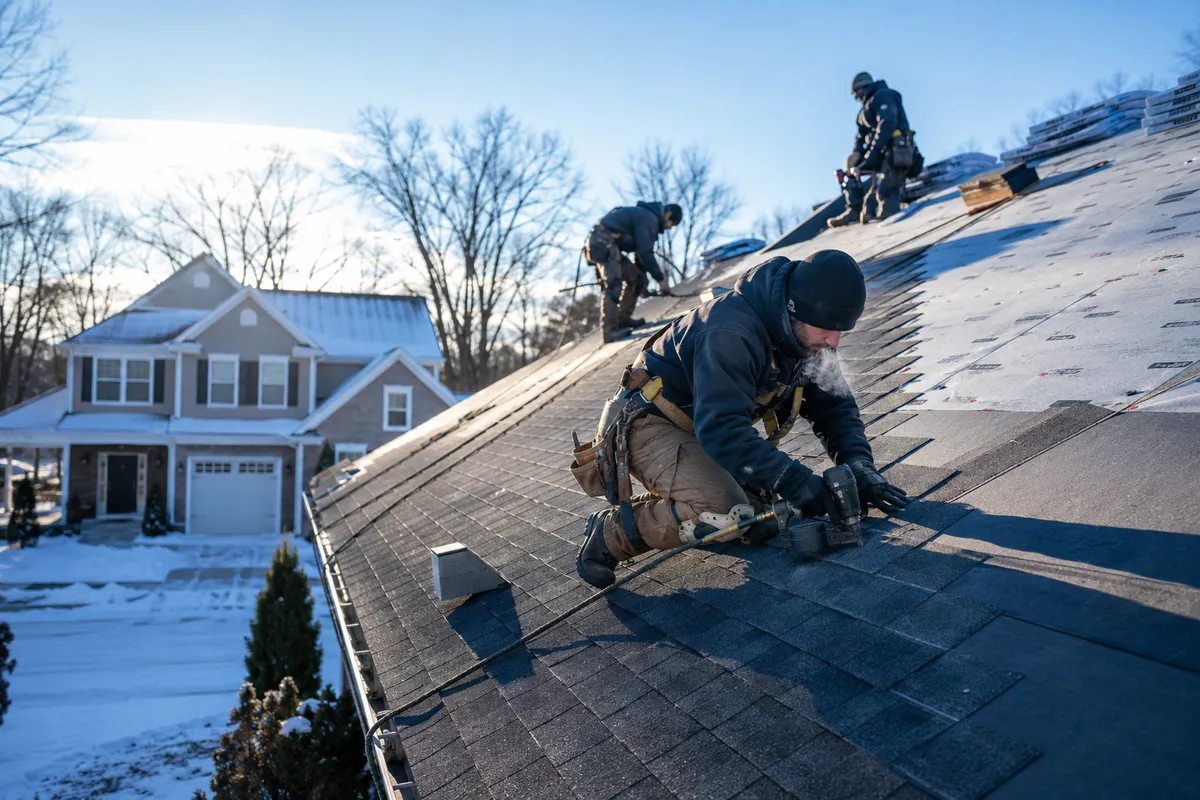
Can Roofing Be Done in the Winter?
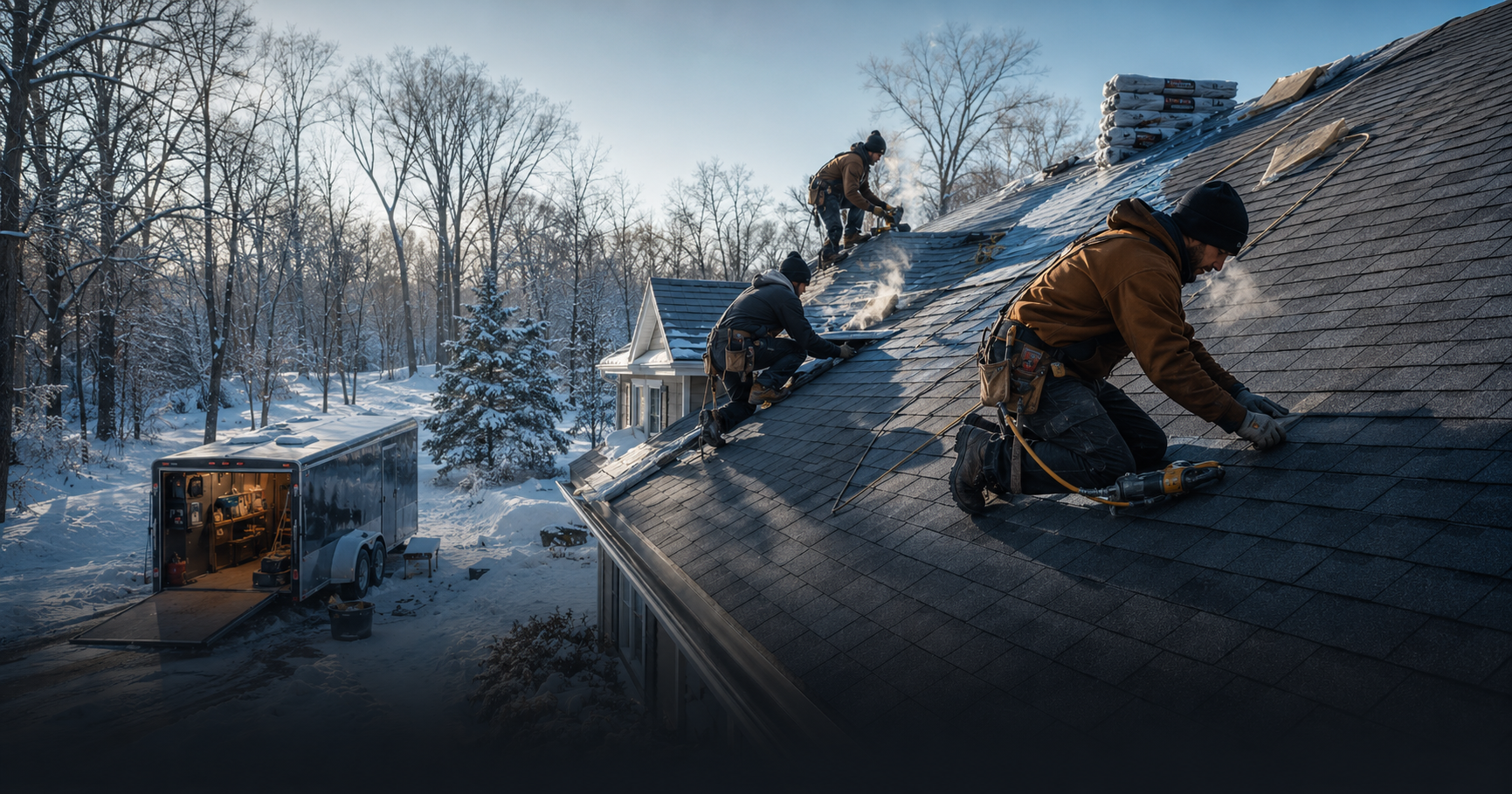
Yes, roofing can be done in winter — and sometimes it has to be (emergency repairs, storm damage, or a closing deadline that can’t wait). But winter installations require extra precautions: shingles must be hand-sealed, materials need to be stored in heated areas, and work should only happen when temperatures are above 40°F. Some contractors offer off-season discounts that can make winter installation financially attractive.
- Yes, winter roofing is possible — experienced crews do it regularly in northern states.
- Temperature minimum: 40°F — asphalt shingle adhesive strips don’t activate below this.
- Hand-sealing is required — each shingle tab gets a dab of roofing cement to compensate for cold-weather seal failure.
- Materials must be kept warm — cold shingles are brittle and crack during installation.
- Off-season pricing: Some contractors discount 5–15% in winter months.
Why Temperature Matters
Asphalt shingles have a thermally-activated adhesive strip on the underside of each tab. When sun heats the shingles after installation, this strip bonds the shingle to the one below, creating wind resistance. Below 40°F, this adhesive doesn’t activate — sometimes for months. Without it, shingles are vulnerable to wind uplift.
The solution is hand-sealing: the installer applies a quarter-sized dab of roofing cement under each shingle tab. It’s time-consuming and adds labor cost, but it provides the wind resistance the adhesive strip can’t deliver in cold temperatures.
Winter Roofing Best Practices
| Practice | Why It Matters |
|---|---|
| Store shingles in heated trailer/garage | Cold shingles crack when bent during installation |
| Hand-seal every tab | Adhesive strips won’t self-seal below 40°F |
| Work only above 40°F | Manufacturer warranty requirement |
| Clear snow and ice from deck | Wet/icy surfaces are unsafe and trap moisture |
| Use winter-grade underlayment | Ice-and-water shield in all valleys and eaves |
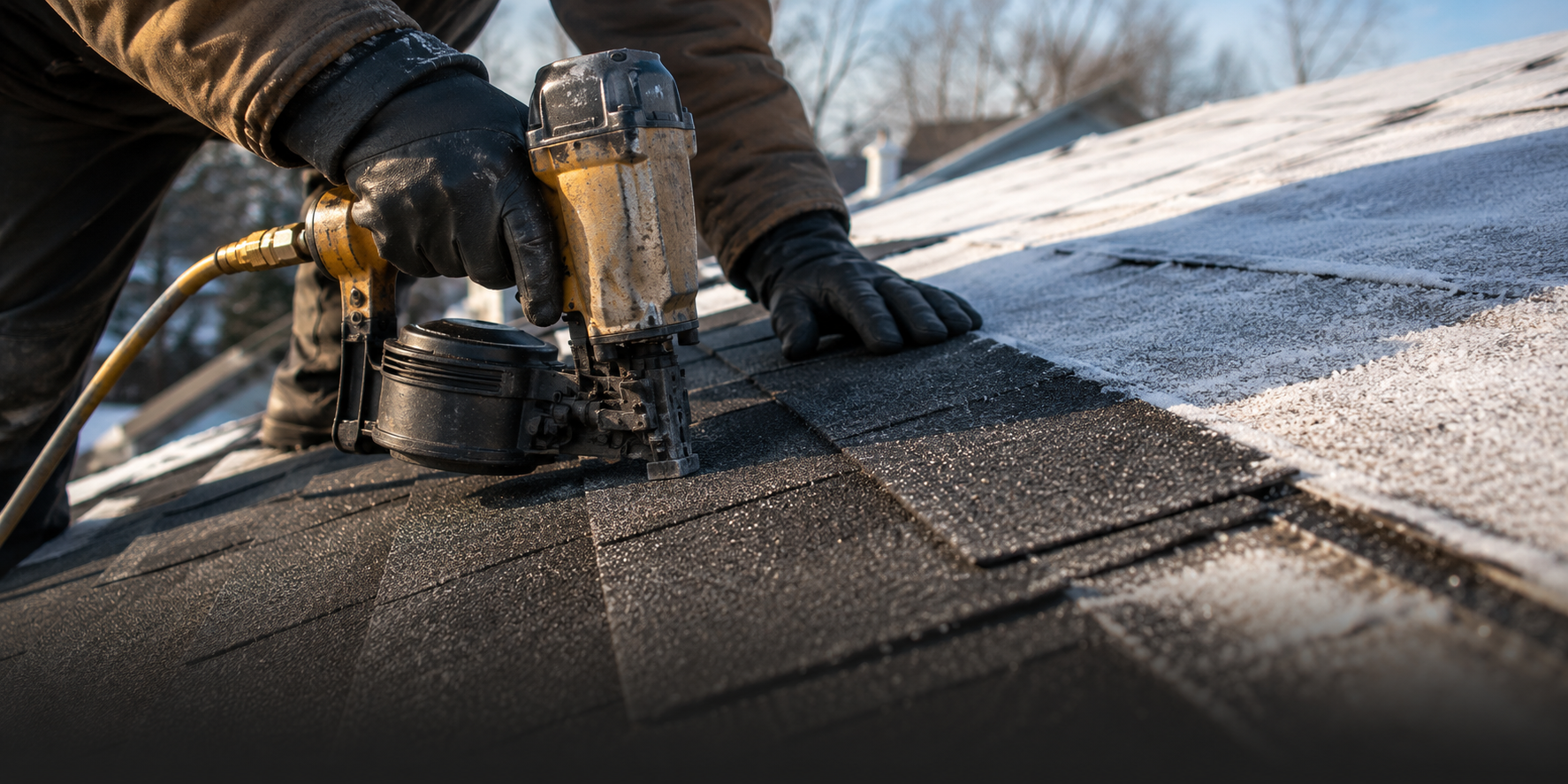
The Off-Season Advantage
Winter is the slow season for roofing contractors in most of the country. That means shorter wait times (days instead of weeks), potentially lower prices, and crews with time to focus on your job without rushing to the next one. If your roof needs replacing and you can handle the scheduling flexibility that weather requires, winter can actually be smart timing.
Frequently Asked Questions
What’s the best temperature for roofing?
45–85°F is the ideal range. Above 40°F is the minimum for most shingle manufacturers.
Will my warranty be valid for a winter installation?
Yes, as long as the installer follows the manufacturer’s cold-weather procedures (hand-sealing, minimum temperature). GAF-certified crews are trained in these protocols.
Do roofers charge more in winter?
Some charge a small premium for the additional hand-sealing labor. Others offer off-season discounts that more than offset it. Ask.
Written by the Roofana Team · Last updated: July 2026
Related: Homeowner Guides Hub · Can Roofing Be Done in the Rain? · When Is Roofing Season?
Price your roof free at roofana.com — 60 seconds, no salesman. Or call (414) 404-7663.
