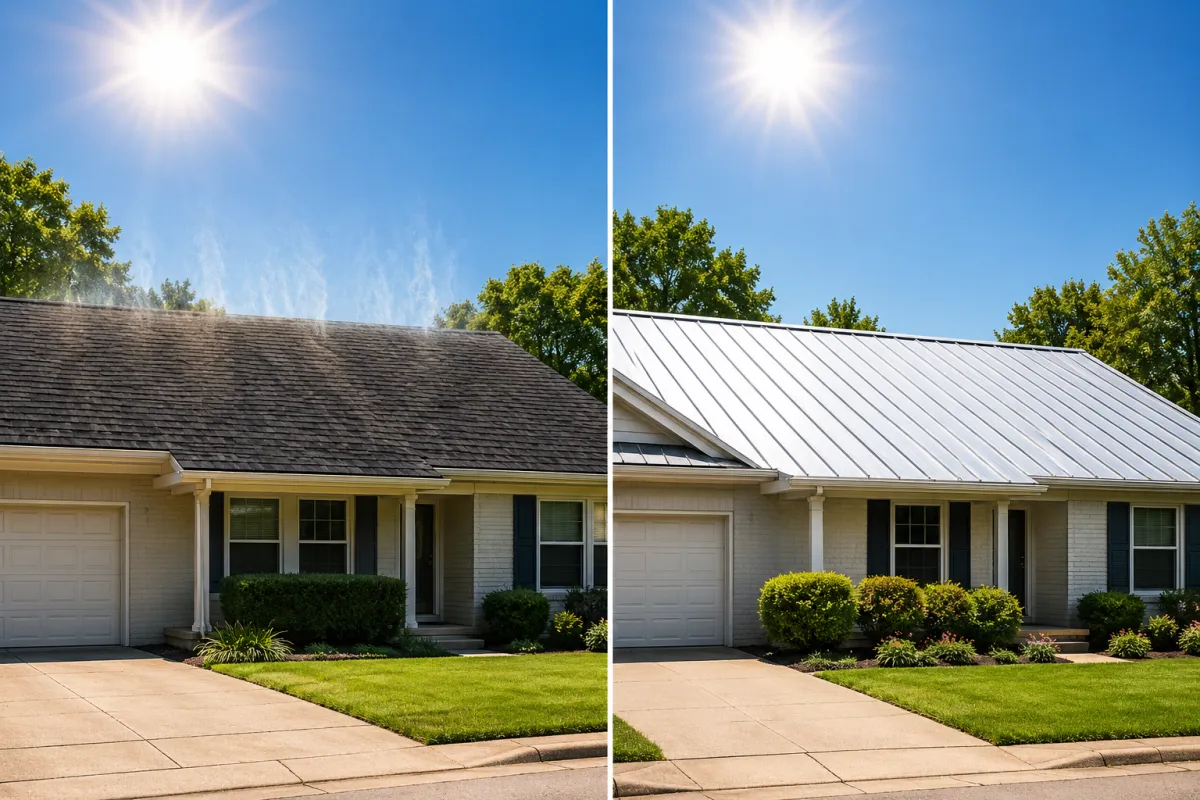
Energy-Efficient Roofing Options for Residential Houses

Energy-efficient roofs reflect more sunlight and release absorbed heat faster, cutting cooling costs by 10–25%. The most common options are cool-roof asphalt shingles, metal roofing, clay or concrete tile, and reflective coatings. Roofana lets you compare material options with real, satellite-measured quotes at roofana.com — 60 seconds, no salesman.
- Cool-roof shingles use reflective granules to bounce solar heat — the simplest upgrade.
- Metal roofing reflects up to 70% of solar energy and lasts 40–70 years.
- Clay and concrete tile naturally manage heat transfer in hot climates.
- Reflective coatings can be applied to existing roofs as a mid-life upgrade.
- Proper ventilation and insulation matter as much as the surface material.
What Makes a Roof “Energy Efficient”?
Two metrics define a cool roof: solar reflectance and thermal emittance. A standard dark asphalt shingle reflects about 5–15% of solar energy. A cool-roof product reflects 25–65%. That difference translates directly to your air conditioning bill — 10–25% savings in Sun Belt states.
Cool-Roof Asphalt Shingles
The lowest-friction upgrade. GAF offers architectural shingles with specially coated granules that meet ENERGY STAR requirements. The premium over standard is typically 5–15%.
Metal Roofing
A light-colored standing-seam metal roof can reflect 60–70% of solar energy. Metal’s longevity (40–70 years) means you avoid the embodied-energy cost of replacing asphalt two or three times.
Clay and Concrete Tile
Tile roofs perform well in hot climates because their shape creates an air gap between the tile and the deck. They last 50–100 years.
Reflective Coatings for Existing Roofs
Elastomeric or acrylic cool-roof coatings cost $1.50–$3 per square foot and can extend roof life by 5–10 years.

Comparison: Energy-Efficient Roofing Options
| Option | Solar Reflectance | Lifespan | Relative Cost |
|---|---|---|---|
| Cool-Roof Asphalt Shingles | 25–40% | 20–30 yrs | $ |
| Metal (Cool-Coat) | 50–70% | 40–70 yrs | $$ |
| Clay / Concrete Tile | 30–55% | 50–100 yrs | $$–$$$ |
| Reflective Coating (retrofit) | 60–85% | extends 5–10 yrs | $ |
Frequently Asked Questions
Are energy-efficient shingles worth the extra cost?
In warm climates, yes. The savings typically pay back the premium within 3–7 years.
Does roof color affect energy efficiency?
Significantly. A white metal roof can be 50–60°F cooler on the surface than a dark asphalt roof.
Can I get tax credits for an energy-efficient roof?
Some ENERGY STAR-qualified products qualify. Check the DSIRE database for your state.
Is metal roofing noisy when it rains?
Not with modern installation over solid decking and underlayment.
Written by the Roofana Team · Last updated: July 2026
Related: Shingles & Materials Hub · Best Roofing Materials · Most Durable Materials
Price your roof free at roofana.com — 60 seconds, no salesman. Or call (414) 404-7663.
