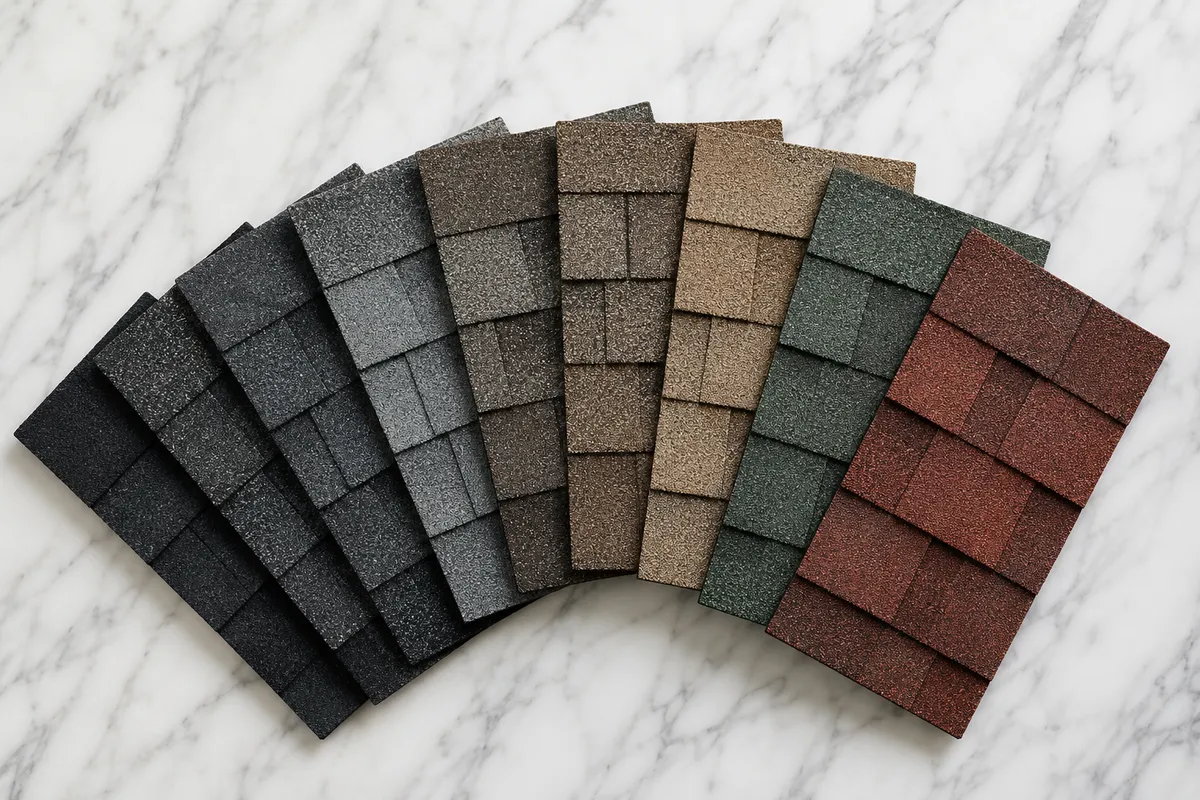
How to Choose Roofing Colors
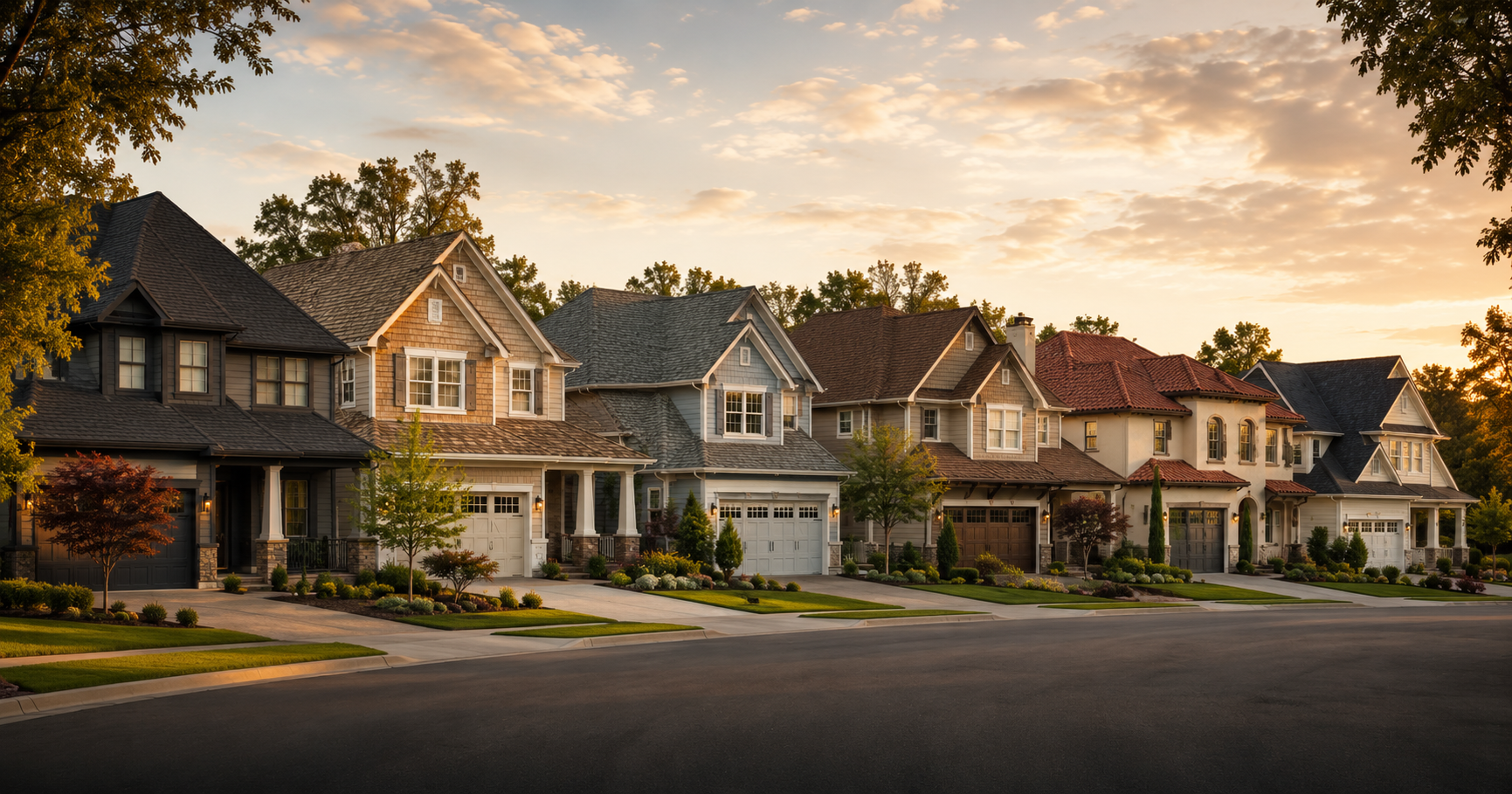
Choosing a roof color comes down to three factors: your home’s exterior palette (siding, trim, stone), your climate zone (light colors reflect heat, dark colors absorb it), and the neighborhood context (HOA rules, street harmony, resale appeal). The right color enhances curb appeal and can even affect your energy bills. Here’s the framework.
- Match your siding undertone — warm siding (beige, cream, yellow) pairs with warm shingle tones; cool siding (gray, blue, white) pairs with cool shingle tones.
- Climate matters — light shingles reflect heat in hot climates; dark shingles absorb warmth in cold climates.
- The most popular colors are charcoal, weathered wood, and slate gray — they work with almost everything.
- Check HOA restrictions before falling in love with a color.
- Use manufacturer visualizer tools — GAF, Owens Corning, and CertainTeed all have online tools where you upload a photo of your home and preview colors.
The Color-Matching Framework
Step 1: Identify your fixed colors. Your siding, brick, stone, trim, front door, and shutters aren’t changing — the roof color needs to work with all of them.
Step 2: Determine warm vs. cool. Look at your siding in natural light. Cream, tan, yellow, and warm gray have warm undertones. Blue-gray, white, and cool gray have cool undertones. Stay in the same temperature family.
Step 3: Create contrast, not match. Your roof shouldn’t be the exact same shade as your siding — it should complement with contrast. Light siding + dark roof is the most classic combination.
Most Popular Shingle Colors by Region
| Region | Top Colors | Why |
|---|---|---|
| Northeast | Charcoal, weathered wood, slate | Classic, pairs with colonial/Cape Cod styles |
| Southeast | Weathered wood, driftwood, amber | Warm tones complement brick and stone |
| Southwest | Desert tan, sandcastle, light gray | Light colors reflect heat |
| Midwest | Charcoal, onyx black, pewter gray | Neutral tones, absorb winter warmth |
| Pacific NW | Slate, moss green, weathered wood | Earth tones match natural landscape |
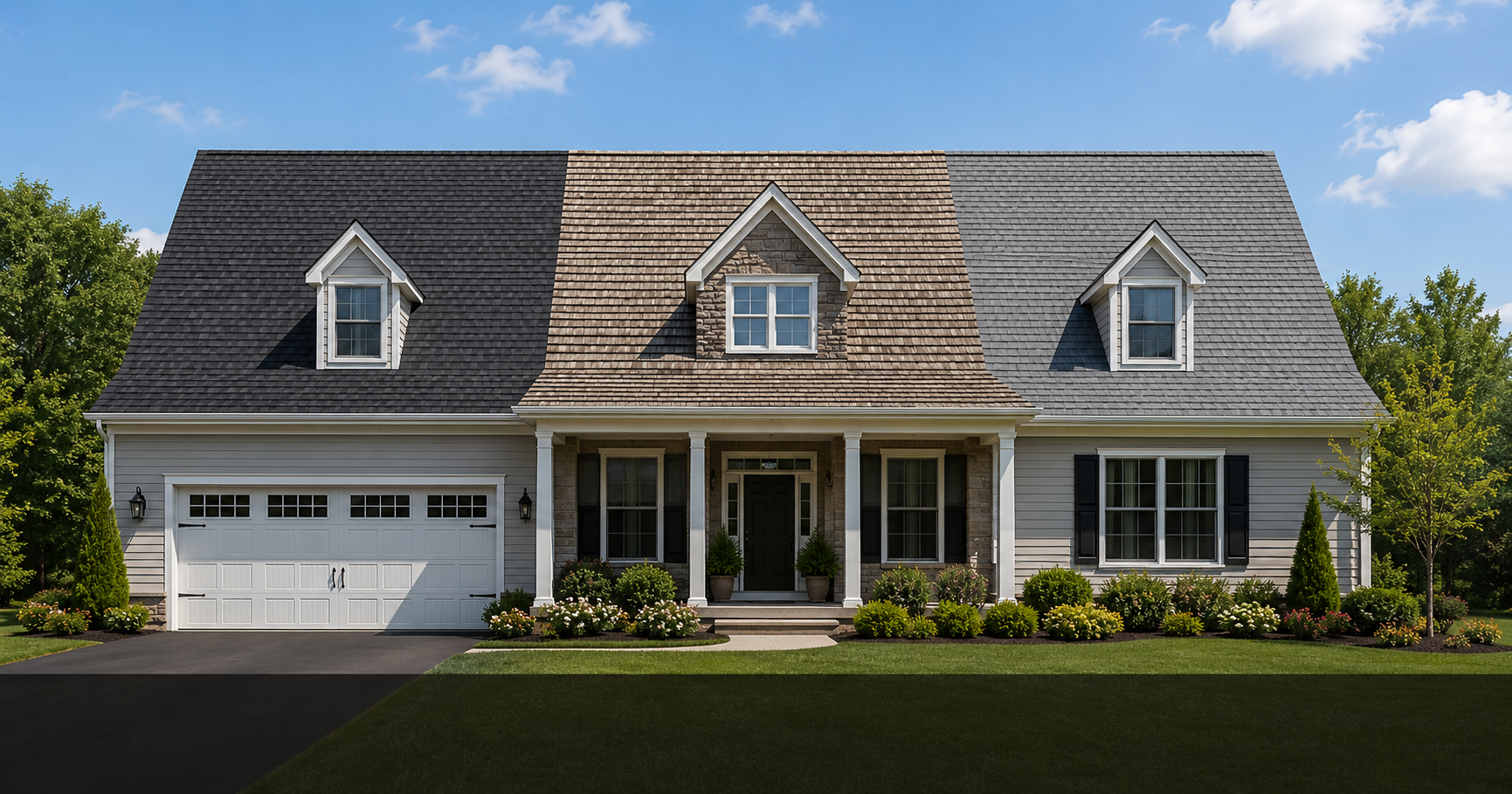
Energy Impact of Roof Color
This isn’t just cosmetic. A light-colored roof in Phoenix can reduce cooling costs by 10–20% compared to a dark roof. A dark roof in Minnesota absorbs solar warmth in winter, reducing heating costs slightly. ENERGY STAR-qualified “cool color” shingles use reflective granules that bounce solar heat even in darker color blends.
Frequently Asked Questions
What roof color has the best resale value?
Neutral colors — charcoal, weathered wood, and slate gray — appeal to the widest range of buyers and have the strongest resale performance.
Should my roof be lighter or darker than my siding?
Darker than your siding is the most traditional and safest choice. It grounds the home visually. Lighter roof + darker siding works on some modern styles but is harder to pull off.
Can I see what my house looks like with a different roof color?
Yes — GAF’s Virtual Home Remodeler, Owens Corning’s Design EyeQ, and CertainTeed’s ColorView all let you upload a photo and preview colors.
Written by the Roofana Team · Last updated: July 2026
Related: Homeowner Guides Hub · Best Roofing Materials · What Material Is the Best?
Price your roof free at roofana.com — 60 seconds, no salesman. Or call (414) 404-7663.
