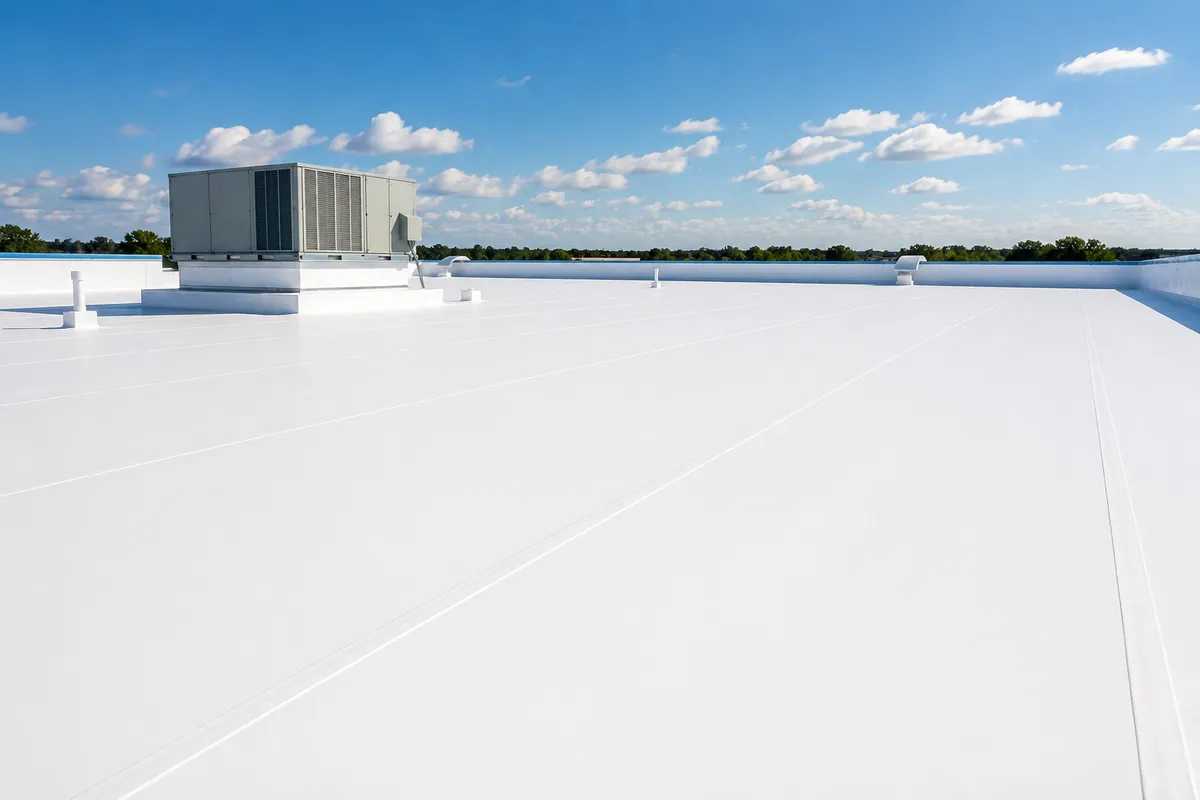
What Is TPO Roofing?
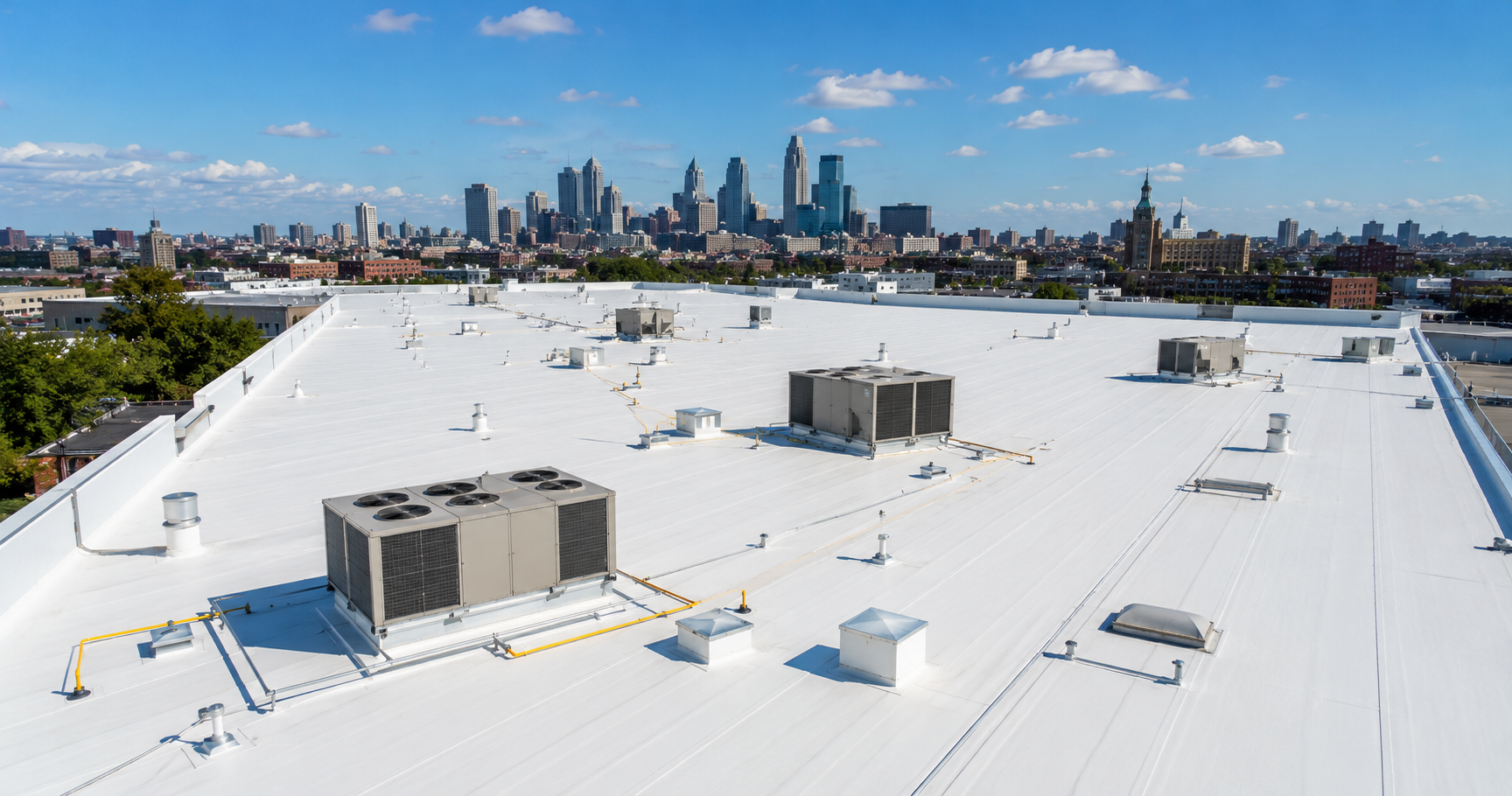
TPO (thermoplastic polyolefin) is a single-ply roofing membrane used primarily on flat and low-slope roofs. It’s the most popular flat-roofing material installed in the US today — a white or light-colored reflective sheet that’s heat-welded at the seams to create a continuous, watertight surface. TPO costs $5–$8 per square foot installed and typically lasts 15–25 years.
- TPO is a single-ply membrane — one layer of synthetic material, heat-welded at seams.
- Primarily for flat/low-slope roofs — residential, commercial, and industrial.
- Highly reflective — meets ENERGY STAR cool-roof requirements, cuts cooling costs.
- Cost: $5–$8 per square foot installed, making it the most affordable flat-roof membrane.
- Lifespan: 15–25 years with proper installation and maintenance.
How TPO Roofing Works
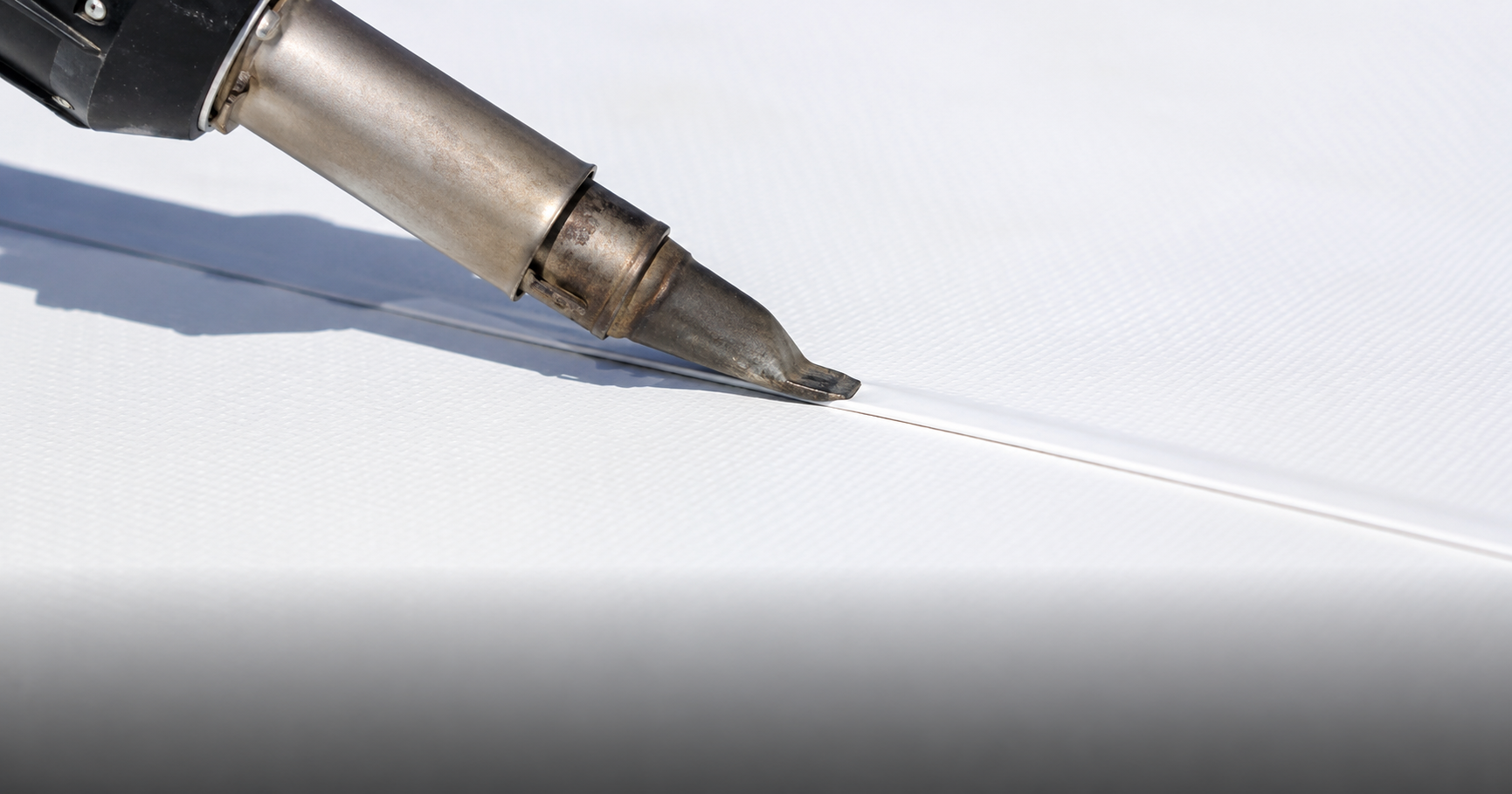
TPO is manufactured in large rolls (typically 6, 8, 10, or 12 feet wide). The sheets are mechanically fastened or adhered to the roof deck, then the overlapping seams are fused together using a hot-air welding gun. When done correctly, the welded seam is actually stronger than the membrane itself — it’s the most reliable seaming method in flat roofing.
The membrane sits on top of rigid foam insulation boards, which provide both thermal performance and a smooth substrate. The complete system is: deck → vapor barrier → insulation → TPO membrane.
TPO vs. Other Flat-Roof Materials
| Material | Cost/sq ft | Lifespan | Best Feature |
|---|---|---|---|
| TPO | $5–$8 | 15–25 yrs | Best value, energy efficient |
| EPDM (rubber) | $4–$7 | 20–30 yrs | Proven longevity, easy repair |
| PVC | $6–$10 | 20–30 yrs | Chemical resistance |
| Modified Bitumen | $4–$8 | 15–20 yrs | Multi-layer durability |
Energy Efficiency
TPO’s white reflective surface is one of its biggest selling points. It reflects up to 80% of solar radiation, which significantly reduces rooftop temperatures and air conditioning costs. In hot climates, a TPO roof can lower cooling energy usage by 10–30% compared to a dark built-up roof.
This reflectivity also qualifies TPO for ENERGY STAR certification and can contribute to LEED green building credits.
Where TPO Is Used
TPO is most commonly found on commercial buildings — warehouses, retail spaces, office buildings — but it’s increasingly used on residential flat roofs, additions, and porch roofs. Any roof with a slope below 2:12 is a candidate for TPO.
Pros and Cons
Pros: Lowest cost flat-roof option, excellent energy efficiency, strong heat-welded seams, lightweight, recyclable, resistant to UV and ozone.
Cons: Shorter track record than EPDM (TPO became popular in the early 2000s), quality varies significantly between manufacturers, and improper seam welding is the leading cause of failure — installer quality matters enormously.
Frequently Asked Questions
How long does a TPO roof last?
15–25 years with proper installation and maintenance. Premium manufacturers offer 20–30-year warranties on their thicker membranes.
Can TPO be installed over an existing roof?
In many cases, yes — TPO can be installed over existing single-ply or built-up roofing if the existing roof is in reasonable condition. This saves tear-off costs.
Does TPO roofing leak?
TPO itself is waterproof. Leaks in TPO systems almost always originate at seams (poor welding), flashings (around penetrations), or drainage failures (ponding water). Quality installation prevents all three.
Is TPO better than EPDM?
TPO is cheaper and more energy-efficient. EPDM has a longer track record and is easier to repair. For new installations in warm climates, TPO is usually the better value. In cold climates where reflectivity matters less, EPDM’s durability edge is worth considering.
Written by the Roofana Team · Last updated: July 2026
Related: Shingles & Materials Hub · Flat Roof Contractors · What Is EPDM Roofing?
Price your roof free at roofana.com — 60 seconds, no salesman. Or call (414) 404-7663.
